

Emotional Health

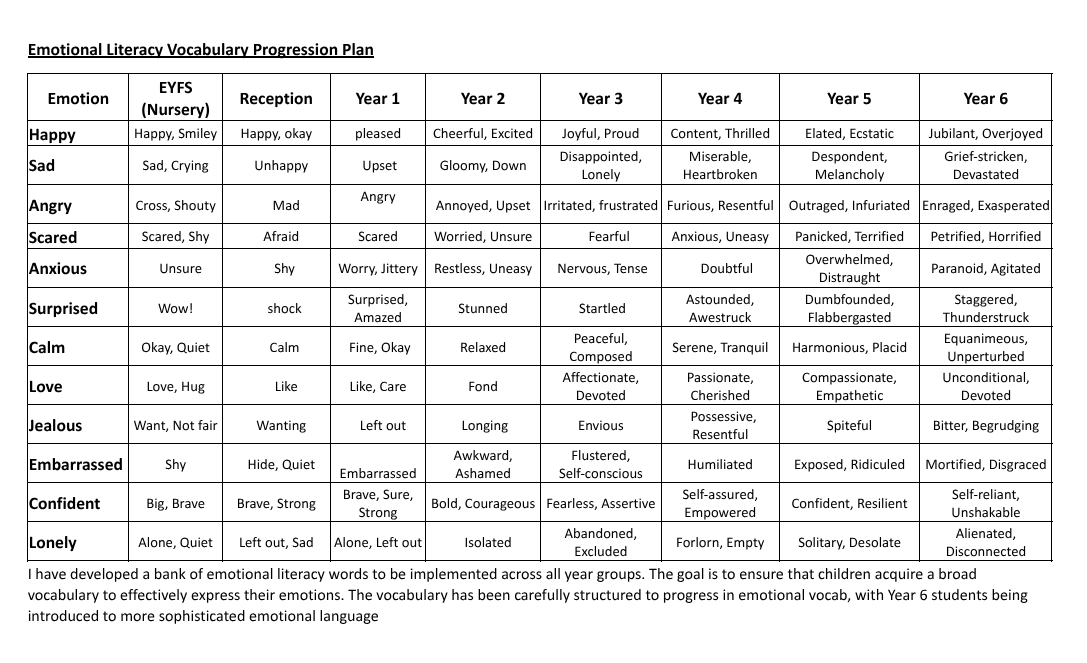
We would like all our children to develop a rich and varied emotional vocabulary so they can express themselves with confidence and clarity. Many children naturally rely on only a few basic words,
such as sad, happy, or angry, which can make it difficult for them to communicate their true feelings or for adults to fully understand what they are experiencing. To support this, we have introduced a progressive emotional vocabulary in school that helps children learn, practise, and apply a wider range of feeling words.
Expanding children’s emotional vocabulary has many benefits. When children have the language to name their emotions more precisely—such as frustrated, disappointed, worried, excited, overwhelmed, or proud—they are better able to understand what is happening inside themselves. This supports emotional regulation, reduces frustration, and helps them choose more positive ways to cope. It also strengthens their communication skills, as they learn to express their needs, seek help, and explain situations more effectively.
A richer emotional vocabulary also supports children’s social development. When they can recognise and describe different emotions in themselves and others, they become more empathetic and build stronger relationships with their peers. It encourages respectful conversations, problem-solving, and a better understanding of how actions affect others.
We kindly encourage you to support this learning at home by modelling these words during everyday routines and conversations. Naming your own feelings, discussing characters’ emotions in stories, or helping your child reflect on their day are simple but powerful ways to reinforce this learning. Working together, we can help children become more confident, emotionally aware, and well-equipped for the challenges of growing up.